Photo Book vs Photo Album vs Prints: Which Is Right for Your Photos?
A printed photo book, a traditional album or a box of prints? Here is how they compare on layout, cost, durability in Gulf heat and humidity, and moving countries, so you can choose for each set of photos.
Pixalby 8 min read
- photo book vs album
- photo albums
- photo prints
- photo storage
- photo books
- UAE
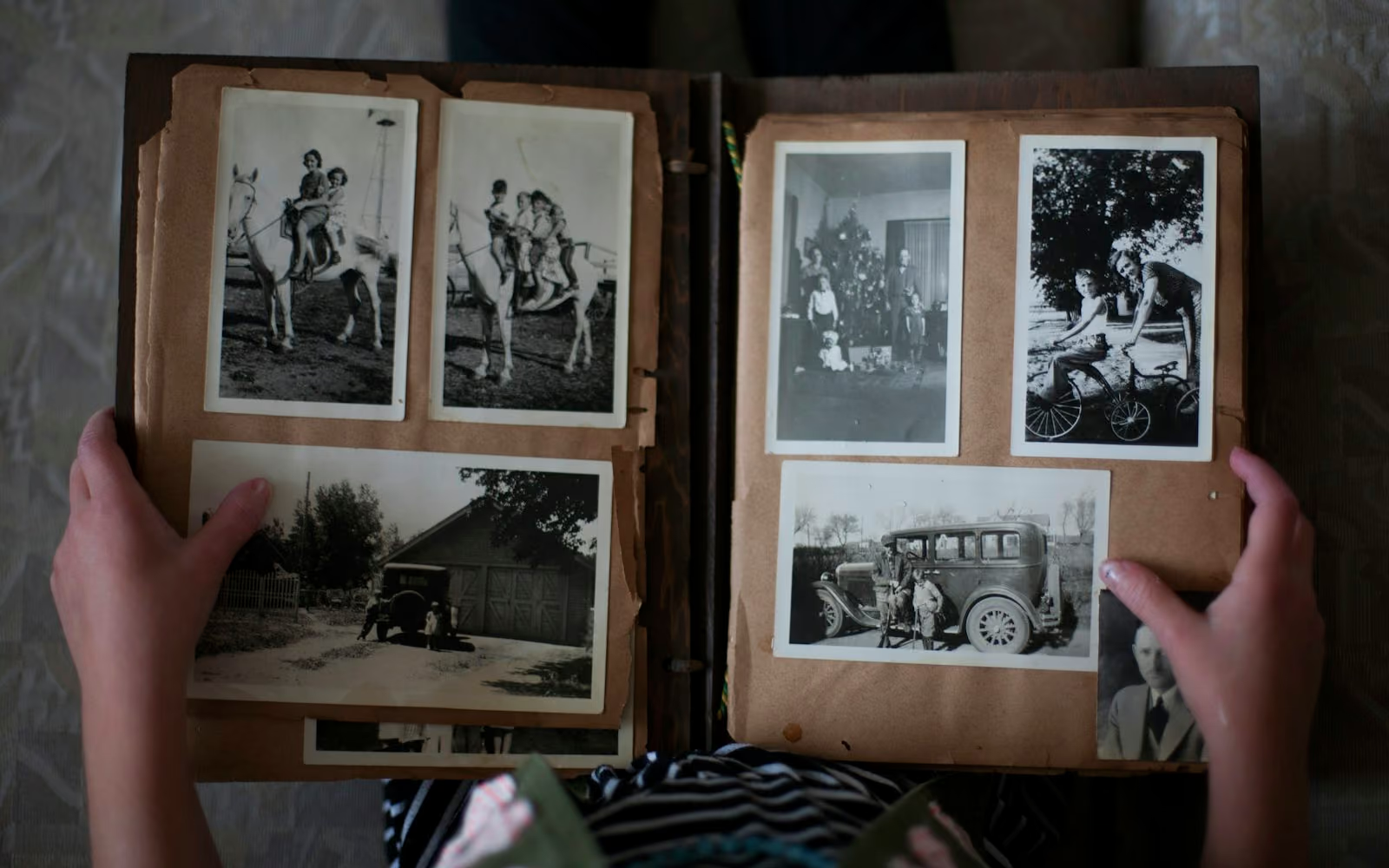
A photo book is printed and bound with your photos and text on the pages. A photo album is an empty book you fill with separate prints, in sleeves, corners or sticky pages. Loose prints are just that: photos you frame, stick on the fridge or keep in a box.
Short answer: choose a photo book for a finished story, such as a trip, a wedding, a baby's first year or a year of family life. Choose an album if you want to keep adding prints over years. Keep loose prints for frames and the fridge. Many Gulf families end up using all three, for different photos.
What each one is
- Photo book. You design the pages on screen, then the whole book is printed and bound. Photos, captions, backgrounds and titles are part of the page. Pixalby books are hardcover, A4 portrait (21 × 29.7 cm), on archival paper.
- Slip-in album. Clear pockets, usually sized for standard prints such as 6 × 4 inches. You slide prints in and can swap them any time.
- Self-adhesive or “magnetic” album. Pages with a sticky backing and a clear film over the top. Common in family homes from past decades.
- Traditional album with corners. Plain paper pages and photo corners or mounts. The most flexible, and the most work.
- Loose prints. Individual photos, printed at a lab or at home, kept in envelopes, boxes or frames.
Side by side: how they compare
- Layout. A photo book lets you put one photo across a page or twelve in a grid, with text anywhere. Albums are fixed to their pocket sizes. Prints are whatever size you ordered.
- Captions and stories. Photo books print names, dates and stories on the page. In albums you write on labels or the page itself. Prints usually carry nothing, which is how the “who is this?” box in every grandparent's cupboard begins.
- Adding photos later. Albums win. A photo book is finished once it's printed, so new photos go into the next one.
- Copies. A photo book is printed from a digital design, so a second copy is the same book. An album is one of a kind.
- Effort. A photo book takes an evening or two on screen. An album means ordering prints, sorting them and sliding in every one by hand.
- Shelf space. A photo book holds many photos on thin pages. Albums with thick pocket pages hold fewer photos for the same width on a shelf.
- Cost. It depends on what you compare. An album plus many prints can cost as much as a book. Pixalby's prices are on each book's page, and 50, 75 or 100 pages cost a little more than 25.
Heat, humidity and the Gulf home
This is the part most comparisons skip, and it matters here. Heat speeds up the chemical decay of photographs, humidity feeds the reactions that cause fading, and light does damage that adds up and can't be undone. Colour photos are especially sensitive to light.
The Northeast Document Conservation Center's guidance on caring for photographs recommends a cool, dry place: about 21°C (70°F) or below, with relative humidity between 30% and 50%. It warns against storing photos on exterior walls, in bathrooms or near heat sources, and suggests an interior room or cupboard is often the best spot.
In a Gulf home, that translates to a few simple rules:
- Keep books and albums on a shelf in an air-conditioned room, not in a storeroom, a garage or a villa's outside cupboard.
- Don't leave them in the car, even for an afternoon in summer.
- Keep them away from windows and balcony doors that get direct sun.
- Keep them out of the bathroom and away from the kitchen hob.
- If a flat is left closed with the air conditioning off over the summer, take precious albums to a friend's or store them in a closed box in an interior room.
Books have one quiet advantage: the pages inside a closed book are shielded from light. Only the cover and spine see daylight on the shelf. Framed prints, by contrast, are in the light every day.
A warning about sticky “magnetic” albums
If you have old family photos in a self-adhesive album, it is worth knowing that conservators advise against them. NEDCC notes that self-stick album pages are often highly acidic and can permanently bond to photographs. It also advises avoiding PVC plastic sleeves, which are unstable, and acidic papers such as kraft and glassine.
For any album you buy for prints, look for photo corners rather than sticky pages, sleeves in polyester, polypropylene or polyethylene, and materials that have passed the Photographic Activity Test (PAT), which checks for harmful reactions with photographs. Labels such as “archival” or “acid-free” are a start, but not a guarantee on their own.
If a precious photo is already stuck fast, don't force it off. Photograph or scan it where it sits, then decide with a professional whether to try removing it. The scanned copy can go into a new photo book with a caption naming everyone in it.
When a photo album is the better choice
An album makes sense when the collection keeps growing and you like the ritual of printing as you go: a child's school photos each September, instant-camera prints from family gatherings, or postcards and tickets you want to keep next to the photos. It is also the right home for original prints that already exist, such as your parents' wedding photos, as long as the album is made from photo-safe materials.
When loose prints make sense
Prints are for display and for giving one photo to one person: a frame on the desk, a picture on the fridge, a print slipped into a card. Their weakness is everything else. A box of unlabelled prints is easy to lose in a move, hard to browse and gives no clue about who, where or when.
When a photo book wins
A photo book is best when the photos tell one story with a beginning and an end. A summer trip, a wedding, a baby's first year, a graduation or a family's year all fit. You can add the dates, the names and the funny thing your daughter said at the airport, so the book still makes sense in twenty years.
- Trips. Every country has its own travel book with its own pastel cover, such as lemon for Italy and sea blue for Greece.
- Weddings. The Wedding Story Book is made for the day and the celebrations around it. See our wedding photo book guide.
- Babies. The Baby First Year Book suits month-by-month photos and milestones.
- A whole year. A family yearbook gathers twelve months into one book. Our year-in-review guide shows how.
In the editor you upload photos from your phone, the pages are laid out automatically, and you can change layouts, add text, stickers and backgrounds, then preview the whole book before ordering. The editor warns you if a photo is too low-resolution to print well, and shows which edge of each page will be trimmed.
The expat factor: moving with your photos
Many Gulf families move countries at least once, and photos are among the things people most want to keep and least want to carry. A shelf of slim photo books packs into one box. Albums with thick pocket pages are heavier and bulkier for the same number of photos, and loose prints are the first thing to go missing between flats.
Because a photo book is printed from a design, more than one copy can exist, so grandparents in another country can keep their own instead of waiting for the next visit to see the album.
A simple system that uses all three
- Make one photo book per trip, big event or year, as soon as it ends.
- Frame a handful of favourites as prints and swap them now and then, so no single print sits in the light for years.
- Keep one photo-safe album for prints that arrive in paper form: school photos, instant-camera shots, prints from relatives.
- Back up the original digital files somewhere other than your phone.
If you are new to photo books, start with how to choose photos for a photo book. It covers how many photos fit 25 to 100 pages and how to check they will print sharply.
Questions people ask
Is a photo book better than a photo album?
For telling one story, usually yes: you control the layout, add captions and can order copies. For a collection that keeps growing, an album is better, because you can add prints at any time. Many families use a photo book for each trip or year and one album for loose prints.
Can I add photos to a photo book later?
No. A photo book is printed and bound as one piece, so new photos go into the next book. That is why people often make one book per trip or per year, with a matching spine, so the series lines up on the shelf.
How long do photo books last?
It depends on the paper, the printing and, above all, where you keep them. Pixalby books are printed on archival paper and bound in hardcover. Store any book upright on a shelf in a cool, dry, air-conditioned room, away from direct sun, and it is well protected.
Where can I print a photo album in Dubai?
If what you want is a printed, bound book of your photos, you can make one online with Pixalby and have it delivered with free shipping. Books are printed in about five business days, and if one arrives misprinted or damaged it is reprinted under a 14-day guarantee.