Saudi Arabia Travel Photo Book: AlUla, Riyadh and Jeddah, Page by Page
Carved tombs at Hegra, mud-brick Diriyah, the cliffs of the Edge of the World and Jeddah's old town. What to photograph in Saudi Arabia and how to plan the book.
Pixalby 8 min read
- Saudi Arabia
- AlUla
- Riyadh
- Jeddah
- Hegra
- travel photo book
- GCC travel
Saudi Arabia has become one of the easiest new trips for Gulf residents: short flights, a long cool season and places that look like nowhere else. AlUla's sandstone tombs and rock formations, Riyadh's mud-brick old capital and Jeddah's old town by the Red Sea make three very different chapters for one book.
Here's what to photograph in each, when to go, the photo manners to know, and a page-by-page plan for 25 or 50 pages.
From Dubai, flights to Riyadh take about two hours, and flydubai flies nonstop to AlUla on some days of the week in roughly three hours. If you live in Riyadh or Jeddah, AlUla is a domestic flight away. Aim for the cooler months, roughly October to March: AlUla's summers are very hot, and sightseeing shrinks to dawn and dusk. GCC nationals don't need a visa; residents should check the official eVisa rules for their passport before booking.
AlUla
Hegra was Saudi Arabia's first UNESCO World Heritage Site, inscribed in 2008: an ancient Nabataean city of tombs carved into sandstone outcrops. Visits are by guided tour only, so book ahead. The best-known tomb, Qasr al-Farid, stands alone at about 22 metres tall. You photograph it from outside, as the interior is closed.
- Qasr al-Farid with a person standing in the frame for scale. Without one, nobody believes how big it is.
- The carved facades in a row: one grid page of doorways and their details.
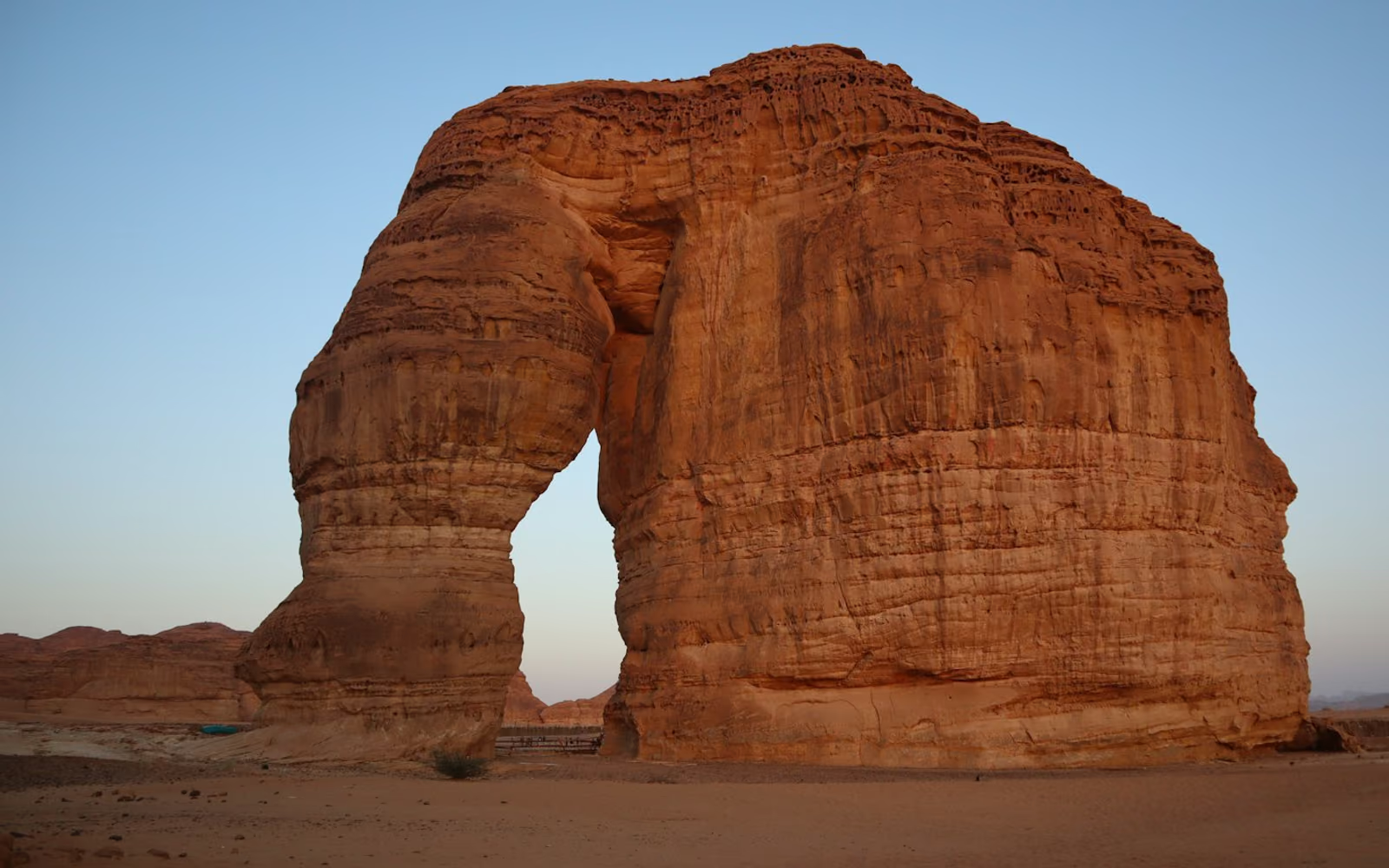
- Elephant Rock at sunset. It's the best light and the busiest time, so arrive early.
- Maraya, the concert hall clad in mirrors, which holds the Guinness World Record for the largest mirrored building. The desert reflects in its walls, so you get two landscapes in one photo.
- The oasis palms and the lanes of AlUla's old town.
- Your family walking away from the camera across the sand, small against the rocks.
Riyadh
At-Turaif in Diriyah, on the edge of Riyadh, was the original seat of the Al Saud family and has been a UNESCO World Heritage Site since 2010. Its mud-brick walls and towers overlook Wadi Hanifah, and late-afternoon light brings out their colour.
The Edge of the World, Jebel Fihrayn, lies about 120 kilometres from Riyadh: sheer cliffs dropping to a wide plain. The last stretch is off-road, and most visitors go with a tour in a 4x4 and stay for sunset. Avoid the middle of the day, when the light is flat and the heat is at its worst.
- At-Turaif's walls and doorways, close up and wide.
- The cliffs at the Edge of the World at sunset, with everyone standing well back from the edge.
- The city lights from a high point after dark.
- Arabic coffee and dates, served in small cups on a tray.
Jeddah
Historic Jeddah, the old town known as Al-Balad, has been a UNESCO World Heritage Site since 2014. It grew as a port for traders and pilgrims, and its tall coral-stone houses with carved wooden windows are the photos most people come for.
On the waterfront, King Fahd's Fountain sends a jet of water 312 metres into the air. Guinness World Records lists it as the tallest fountain in the world, and it's visible from much of the city. Photograph it at sunset from the corniche.
- Al-Balad's wooden windows and balconies, shot looking up.
- The souq lanes and the stalls.
- The corniche at sunset with the fountain behind.
- A day on the Red Sea: the water, the boat, the kids with snorkels.
Photo manners in Saudi Arabia
Landscapes and buildings are fine to photograph. With people, ask first, and especially before photographing women. Ask a parent before photographing children, and don't photograph government buildings, military sites, palaces or security staff. At mosques, avoid photographing during prayer, and don't photograph other worshippers without permission.
The simple rule for your book: your own family, the places and the details. Those are the photos you'll want anyway.
Shooting in desert light
The desert is hardest to photograph at midday: the light is flat, the sand glares and everyone squints. Plan the big shots for the first and last hours of the day, when the sandstone turns orange and shadows give the rock its shape.
- Tap the brightest part of the scene and nudge the exposure down, so the sky keeps its colour.
- Shoot into the sunset for silhouettes of the family against the rocks.
- Keep phones zipped away when the wind picks up. Sand gets everywhere.
- Take the same view at noon and at sunset. Side by side in the book, they show how much the place changes in a day.
How to lay out the book
- Make a chapter for each city, in the order you travelled.
- Open each chapter with one full-page photo: the tomb, the mud-brick walls, the old town.
- Group by colour. AlUla's oranges sit well together, and so do Jeddah's whites and sea blues.
- Use full pages for scale shots, where people stand small against rock.
- Use grids of four for doorways, windows and balconies. They look better as a set than one by one.
- Caption with names and dates, such as 'Hegra, 12 December'.
For the cover, the Full photo design suits Elephant Rock or Qasr al-Farid. The Classic design puts a big title over a framed picture on a colour, and a warm desert colour works well with AlUla. More ideas are in our guide to photo book cover ideas.
Page-by-page plan
25 pages: a long weekend in AlUla
- Page 1: the title page, with the trip name, the dates and a family photo.
- Pages 2–3: arrival. The plane window over the desert and the first view of the rocks.
- Pages 4–9: Hegra. Qasr al-Farid full page, then grids of the tombs and doorways.
- Pages 10–11: Elephant Rock at sunset.
- Pages 12–13: Maraya and its reflections.
- Pages 14–15: the old town and the oasis.
- Pages 16–17: food and coffee.
- Pages 18–21: the family: one portrait each and one of everyone together.
- Pages 22–23: the details: tickets, a map, the sand from your shoes in a jar.
- Pages 24–25: the last sunset and home.
50 pages: a week in Riyadh, AlUla and Jeddah
- Pages 1–3: the title page, a map of the route and the flight.
- Pages 4–15: the Riyadh chapter: At-Turaif, the city and the Edge of the World at sunset.
- Pages 16–17: the flight to AlUla.
- Pages 18–31: the AlUla chapter: Hegra, Elephant Rock, Maraya and the old town.
- Pages 32–33: the flight to Jeddah.
- Pages 34–43: the Jeddah chapter: Al-Balad, the corniche and the fountain, and a Red Sea day.
- Pages 44–47: portraits and the family together.
- Pages 48–49: the details: tickets, receipts and boarding passes.
- Page 50: home, with everyone's favourite moment.
Itinerary guides often suggest about a week for these three cities, flying between them. If you went longer, a 75- or 100-page book gives each day its own spread. To narrow down a full camera roll, see how to choose photos for a photo book.
About the Saudi Arabia book
Every country has its own travel book in the shop. The Saudi Arabia photo book carries the map of Saudi Arabia or one of your pictures on the back cover, with the name, and its spine carries the country's name, which you can change. It's a hardcover A4 portrait book on archival paper. A book starts at 25 pages, and 50, 75 or 100 pages cost a little more. Prices are on the book's page.
How it works
- Pick the Saudi Arabia book.
- Name it: the title, your name, a back-cover quote, the spine text and a colour.
- Upload photos from your phone.
- The pages are laid out for you automatically.
- Edit anything: layouts, text, stickers and backgrounds.
- Preview the book and order.
It's printed in about five business days and ships free. If it arrives misprinted or damaged, it's reprinted under our 14-day guarantee.
A long weekend is often enough for AlUla, which makes it a good Eid break; our guide to an Eid family photo book has ideas for the rest of the holiday. For other short trips from the Gulf, see our travel photo book ideas.
Questions people ask
What is the best time to visit AlUla?
The cooler months, roughly October to March, are the most comfortable. Summers are very hot, and outdoor sightseeing is limited to the early morning and evening.
How do you get to AlUla from Dubai?
flydubai flies nonstop from Dubai to AlUla on some days of the week, in roughly three hours. From Riyadh or Jeddah, it's a domestic flight. Check current schedules, as the number of flights changes through the year.
Do I need a tour to visit Hegra?
Yes. Visits to Hegra, including Qasr al-Farid, are by guided tour only, so book ahead, especially for weekends and holidays.
Can I take photos of people in Saudi Arabia?
Ask first. Landscapes and buildings are fine, but ask before photographing anyone, and especially women, and ask a parent before photographing children. Don't photograph government, military or security sites.
How many days do you need for Riyadh, AlUla and Jeddah?
About a week works well for a first trip, with two or three nights in each and flights between them. A long weekend is enough for AlUla on its own.